Grading, storing and cleaning casino chips
Condition is a large part of how collectors describe chips, and careless cleaning can ruin a chip's inlay or hot stamp. This article covers the standard grading terms, cleaning guidance from the Casino Collectibles Association (CCA) and forum members, and storage.
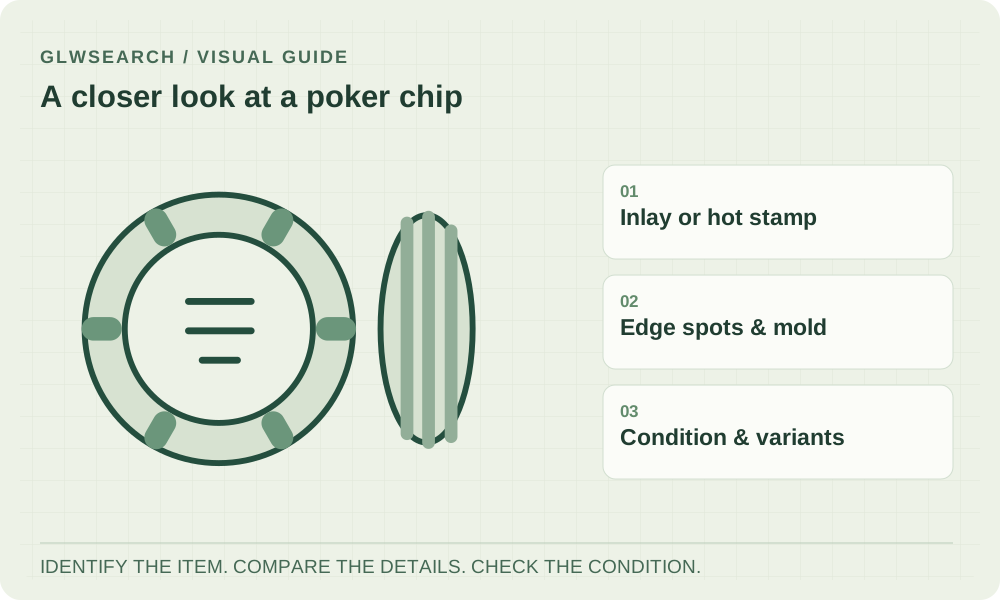
In this guide
Condition grades
According to Wikipedia, the collecting community's standardized grading system dates from 2003: New (N), Slightly Used (SU), Average (A), Well Used (WU) and Poor (P), with categories for cancelled or modified chips and for damaged ones. Grades assess edge condition, surface wear and the legibility of the inlay or hot stamp.1 Hot stamps and inlays are among the first features to show wear, so they weigh heavily.1 2
Forum sellers also use words such as "mint", "near mint" and "casino used". One forum member says "casino used" covers everything from chips still square and textured to ones worn smooth, and that secondary chips tend to remain mint.3 Terms like these are informal, so ask for photos of both faces and the edge. The CCA notes that many collectors object to slabbing chips in plastic, because it substitutes subjective grading for a universal standard and restricts handling.4
Should you clean a chip?
The CCA's cleaning guidance is cautious: cleaning a chip can damage it or give it an unnatural appearance, though cleaning a dirty chip that is otherwise in good condition can improve it.2 It advises against cleaning:
- very old or expensive chips (leave them to professionals);
- chips with paper inserts;
- extremely dirty chips;
- light-colored chips where dirt is hard to remove;
- worn chips, which look unnatural when spotless;
- chips you plan to trade or sell.
Methods the CCA describes
- A soft-bristled toothbrush with mild dish detergent, or a pencil eraser for scuffs.
- Specific cleaners it names as acceptable include Quick'n'Brite, Sterling Magic and Armor All Multi-Purpose Cleaner.
- Afterward, a small amount of mineral oil or baby gel to restore luster, with 24 to 48 hours of drying between sides.2
What the CCA says never to do
Do not use abrasives or wire brushes; steam, which it says softens and warps clay; washing machines; lacquer thinner, which dissolves chips; or microwave heat, which causes separation of inlays. Do not scrub hot stamps with a toothbrush.2
The oiling method collectors discuss
A well-known Poker Chip Forum thread by a member describes washing chips, drying them thoroughly, applying mineral oil and wiping off the excess. Its advice includes oiling both sides of plastic rack holders (which can absorb oil from the chips), wiping oil off labels or stickers and testing on a few chips first, particularly brands you have not tried. A vendor in the thread warns against excess water, soap or oil. Members said chips kept their improved look months later.5 Treat this as owner experience, not a manufacturer recommendation.
Leaded chips
Cleaning does not remove the lead from a leaded chip, and scrubbing or sanding can create dust. Use wet methods, keep children away, and wash your hands (see the leaded chips article).
Storage
The CCA lists "storing chips" as a topic in its education FAQ, so check there for its current guidance. The following are common-sense measures, not manufacturer guidance: keep chips in a stable, dry place, avoid heat (the CCA warns that microwave heat separates inlays, and steam warps clay), and avoid long contact with materials that can transfer oil or color. Forum members note that plastic rack holders can absorb oil from oiled chips.5
If you keep leaded chips, store them in a container out of reach of children and label it.
Document condition before deciding on treatment
Create a short condition record while the chip is still untouched. Photograph both faces in neutral light, then an angled edge view that shows chips, rounding or flattening. Record the legibility of the hot stamp, any lifted inlay, stains and any cleaning history supplied by the seller. This baseline is useful when comparing lots or explaining a later trade.
| Observation | Better listing wording |
|---|---|
| Foil missing from part of the value | Describe the missing area rather than saying 'excellent' |
| Smooth rim and worn face texture | Record both kinds of wear |
| Crisp edge with one nick | Show the nick in a close-up |
| Surface recently oiled | Disclose the treatment and photograph the current appearance |
Does a brighter color mean a higher grade?
Not necessarily. Condition includes edges, surface wear and the stamp or inlay; appearance alone can hide a worn rim or a damaged center. The CCA's cleaning page also warns that treatment can damage a chip or change its appearance.2
What should stay with the stored collection?
Keep the venue, denomination, catalog reference, acquisition notes and treatment history with your inventory. Separate original casino chips from relabels and replicas. If a chip has an uncertain material or a fragile insert, postpone cleaning while you seek advice specific to that issue. Leaving it unchanged preserves the option to decide later.
Sources and further reading
- Casino chip collecting, Wikipedia: grading system and wear.
- Cleaning casino chips, Casino Collectibles Association: what to avoid and how to clean.
- Some General Terminology Questions, Poker Chip Forum: casino used and secondary chips.
- Scams FAQ, Casino Collectibles Association: comments on slabbing.
- Oiling Chips Done Right, Poker Chip Forum: member method and cautions.