Porsche 996 Turbo with the X50 package: what it is and how to verify it
Searching for a 996 Turbo with the "X50" option is common, because the option changes the car. But X50 is easy to claim and harder to verify, so it is worth understanding what it actually is, how the factory documented it, and what else to inspect on a twenty-year-old turbocharged all-wheel-drive Porsche.

In this guide
What X50 is
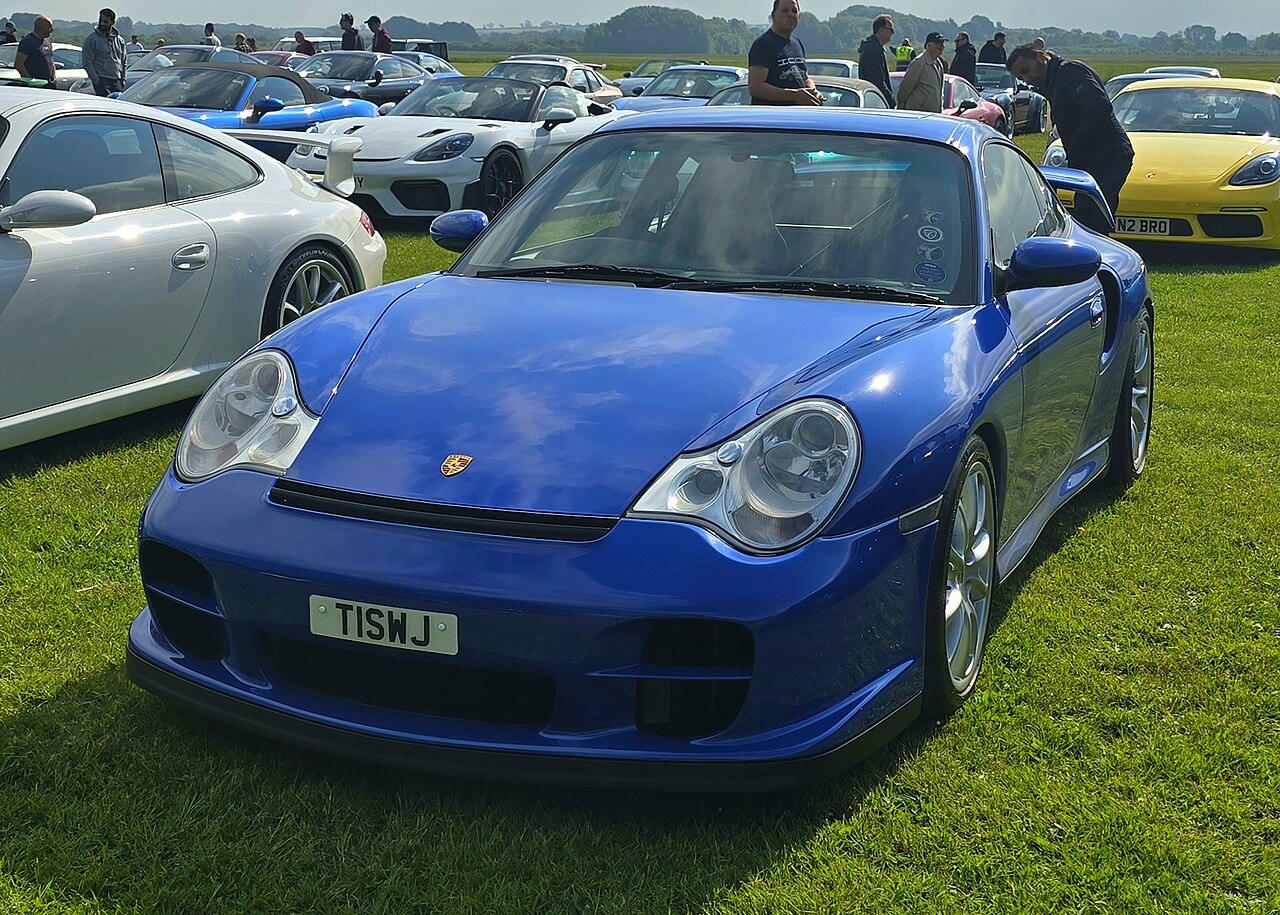
The 996 Turbo debuted with a water-cooled, twin-turbocharged 3.6-litre flat-six producing 420 PS (414 hp), derived from the engine of the 1998 Le Mans-winning 911 GT1. The X50 power package, available from 2002 (Elferspot says late 2001), brought larger K24 turbochargers and intercoolers, a revised ECU and a quad-pipe exhaust, lifting output to 450 PS (444 hp).12 Elferspot quotes torque rising from 560 N·m to 620 N·m.3 Stuttcars lists the X50 engine as M96/70E, and 450 hp at 6,000 rpm with 457 lb-ft at 4,400 rpm.4 Sources disagree slightly on dates (the Turbo's production run is given variously as 2000 to 2006 or 2001 to 2005), so rely on the car's own build documents rather than a year.
From 2005 the Turbo S came with X50 specifications as standard, adding ceramic brakes, a CD changer and aluminium-faced instruments.1 The Turbo Cabriolet arrived for the 2004 model year, the first mass-produced Turbo Cabriolet since the 1989 930.1
Why the engine design matters
The 996's regular M96 Carrera engines had a well-documented intermediate-shaft (IMS) bearing issue and bore scoring.1 The Turbo uses a different engine, a Mezger-derived design that keeps the aluminium crankcase and dry-sump oiling of the air-cooled 911; the IMS problem is documented as not applying to these GT-family engines.1 The Drive's IMS history (sponsored content from an IMS parts maker) agrees that the 996 Turbo, GT2 and GT3 used plain journal bearings and avoided the problem.5 Even so, a 996 Turbo is a twenty-year-old turbocharged car, so inspection still matters.
Verifying X50
- Porsche documentation. A Certificate of Authenticity lists the factory options by code. X50 should appear there.6 In the US, Porsche's equivalent is the Porsche Production Specifications, which lists optional equipment and engine and gearbox type but not serial numbers.7 Owners on a Porsche Club GB thread note that such documents are not always complete (one reported factory air conditioning missing from a certificate), and that the thread's originator confirmed X50 through an official certificate of production.8
- Hood sticker and service book. Elferspot says a factory X50 car is identifiable by the X50 code on the hood sticker and that retrofitted versions lack factory documentation.2 The Stuttcars engine code (M96/70E) is another cross-check.4
- Physical evidence. The package included larger intercoolers and a quad-pipe exhaust; Club GB posters describe distinctive finning on the X50 intercoolers. Ask a specialist what they should see rather than relying on the exhaust, which is easy to swap.8
- Beware of tuning. An aftermarket remap or turbo upgrade is not the same as the factory X50. Elferspot says the Mezger engine tolerates mild power increases and that mild software tuning is acceptable, but stock internals limit safe modification and modified cars need detailed tuning records.2
- Porsche Classic. Porsche Classic's Technical Certificate, available for models out of production for ten years or more (the 996 is on its list), documents the original data, engine and transmission numbers and an inspection by a Classic Partner.9
Manual or Tiptronic
The Turbo came with either a 6-speed manual or a 5-speed Tiptronic S.1 Elferspot calls the Tiptronic mechanically trouble-free and the manual susceptible to synchromesh wear, with grinding from first to second a warning sign.2 A UK specialist, Sports Vehicle Performance, adds that Tiptronic gearboxes can leak oil between the drop gears and the casing from failed internal gaskets, which can now be repaired with updated gaskets.10 Most enthusiast buyers look for the manual; the Tiptronic is the more relaxed choice.
What typically needs checking
- Coolant pipes. The coolant pipes are bonded into alloy housings and can fail with age and heat cycles; a proper repair requires engine removal, and the UK specialist calls it the top concern.10 Ask for proof of pinning or welding.
- Radiators and cooling. Elferspot says debris and moisture can corrode the radiators from inside, with debris collecting behind the front bumper intakes; cooling leaks are common on aging examples.2
- Turbo-related. Turbo oil drain pipes can corrode into the sump, exhaust studs commonly corrode (making exhaust work expensive), intercoolers corrode and boost hoses perish and crack. The turbos should be quiet on a cold start.10
- Rear spoiler and bump stops. The hydraulic spoiler rams often leak and may raise unevenly; the bump stops commonly crack or disintegrate.10
- Brakes. Steel brake pipes corrode and the central joiner blocks can trap moisture.10 Ceramic composite brakes (PCCB) are optional and costly to replace, and Elferspot says some owners retrofit steel rotors.2 Brakes are safety-critical: have them assessed by a qualified professional.
- Mounts and suspension. Worn engine and suspension mounts cause vibration and clunks over rough roads.2
- Mileage. Elferspot advises checking control-unit operating hours and over-rev records, as high-mileage cars are sometimes tampered with.2
- Documented campaigns. NHTSA lists two 2001 Turbo recalls: campaign 01V016000 (fuel supply and return lines that could chafe on the intake manifold or a clamp, with a fire risk) and 01V015000 (clutch pressure line leakage on manual cars, which could affect clutch and steering assistance). It also lists an Ohlins recall of certain aftermarket front-strut kits sold for the 996 Turbo, which matters only if those struts are fitted. Recalls are VIN-specific, so check the VIN at nhtsa.gov/recalls and ask a specialist about completion.11
Service history first
Specialists consistently put service history ahead of mileage; Elferspot says deferred maintenance accumulates into five-figure repair bills, and the UK specialist says a well-maintained high-mileage car is a safer buy than a neglected low-mileage one.210 Before paying a premium for X50, get an independent pre-purchase inspection from a specialist who has worked on 996 Turbos, including a compression or leak-down test and a boost-leak test. Check live listings for availability; this page does not track the market.
Factory X50 versus an X50-specification conversion
An advert describing "X50 power" may refer to factory equipment, retrofitted hardware or a tuned standard Turbo. Ask which claim the seller is making. For a factory car, request the original option record and photographs of the option labels; for a conversion, request parts and installation invoices and the ECU calibration history. The two histories should not be merged merely because a dyno result looks similar.
A useful remote-viewing set includes the engine bay, both intercooler areas where visible, exhaust details, rear-spoiler operation, front cooling intakes and underside. Ask whether a coolant-pipe repair involved pinning, welding or another method, which fittings were addressed and who performed it. A broad phrase such as "pipes done" needs supporting detail.
Does Turbo S mean exactly the same purchase?
The later Turbo S incorporated X50 specifications, but the equipment and individual car's history still need checking. Ceramic brakes may have been replaced with steel, wheels may have changed, and prior tuning may remain even on a factory power-package car. Compare the current configuration with the delivery record.
For a manual, ask about clutch and gear engagement both cold and warm. For a Tiptronic, ask for gearbox-fluid and leak-repair records. Either search should also record coupe or Cabriolet, delivery market and acceptable modifications, so a rare option does not distract from the car's actual condition.
Sources and further reading
- Porsche 996, Wikipedia: engine, X50 package, Turbo S, Cabriolet, IMS scope.
- Porsche 996 Turbo buyer's guide, Elferspot: a Porsche marketplace's guide; its dates differ from Wikipedia in places.
- Porsche WLS power kit: what do X50, X51 and others actually mean?, Elferspot
- Porsche 911 Turbo X50 (996), Stuttcars: a Porsche news and guide site.
- The IMS Solution and IMS Retrofit: a complete history, The Drive: sponsored content from an IMS parts maker.
- What is a Porsche Certificate of Authenticity?, Flatsixes: contents of the certificate; its ordering instructions are dated.
- Vehicle information, Porsche USA
- X50 option code, Porsche Club Great Britain forum: club members' discussion; opinion, not an official statement.
- Porsche Classic Technical Certificate, Porsche USA
- Porsche 996 Turbo: buyer's guide, Sports Vehicle Performance: a UK specialist workshop's guide.
- NHTSA recalls lookup and its recall API for Porsche 911 Turbo, model years 2001-2005.