Sands Hotel and Casino (Las Vegas) chips
A collector posted a wanted thread for "Sands $1 chips" with an image and little else. That is typical: "Sands" is a common name in gaming, and the thread does not say whether it means the Las Vegas Strip casino or another property, nor the maker or era of the chip. This article sets out the history of the best-known Sands, the Las Vegas one, and how to pin down which Sands chip you actually hold.
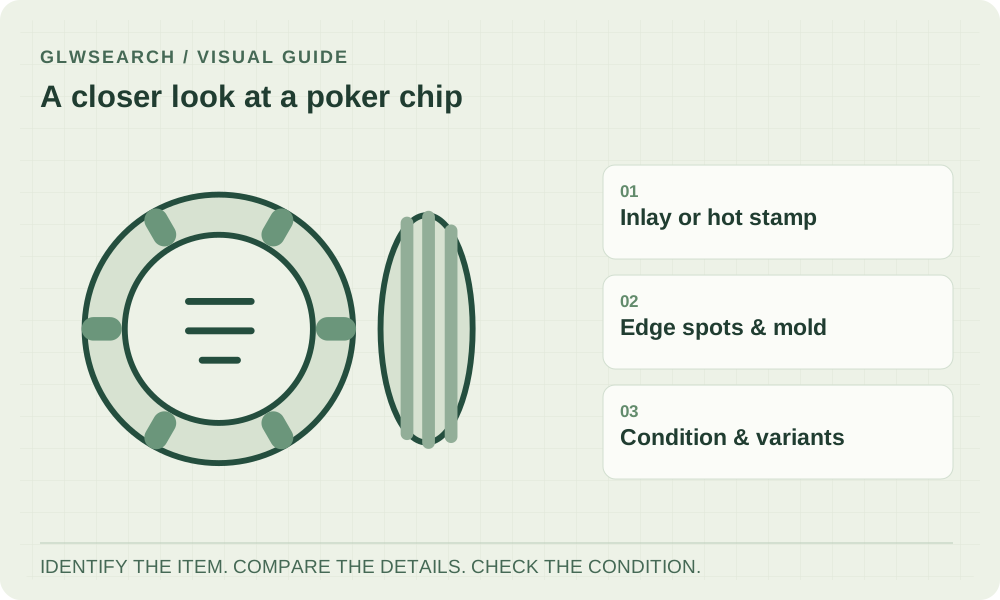
In this guide
History of the Las Vegas Sands
The Sands opened on 15 December 1952 as the seventh resort on the Las Vegas Strip, designed by architect Wayne McAllister and fronted by a 56 foot sign. It began with 200 rooms in motel-style wings named after racetracks. Frank Sinatra made his debut there in 1953, Nat King Cole was one of the first Black performers allowed to stay and perform there in 1955, and the 1960 film Ocean's 11 was shot there during the "Summit at the Sands" shows. In 1967 Howard Hughes bought the hotel, and a new 500 room tower designed by Martin Stern Jr. was added. MGM Grand bought the property in 1988 and Las Vegas Sands, Sheldon Adelson's company, acquired it in 1989. The last casino game was played on 30 June 1996, and the building was imploded on 26 November 1996. The Venetian opened on the site in 1999.1
A house chip from the Las Vegas Sands therefore dates from 1952 to 1996, a span of over four decades, and different chip makers and designs were certainly used over that time. The wanted thread does not specify which period its chip comes from.
Which Sands?
Several casinos have used the name. The Poker Chip Forum thread behind this article posts photographs but does not identify whether the $1 chip is from Las Vegas, and the pages read do not tell us.2 To narrow it down:
- Read the chip's rim and face. Casino chips often carry a city or state; the Sands in Las Vegas will say Las Vegas or Nevada.
- Look up the chip in the Museum of Gaming History ChipGuide, which lists casino addresses, opening and closing dates and chip details, to see which Sands entries exist for a $1 chip.3
Collecting notes
The pages read give no information about which Sands $1 chips are common or scarce, or about reproductions. Use a catalogue entry rather than a seller's description as the baseline for authenticity.
Build a Sands chip record around the actual issue
For a Sands $1, start with the city printed on the chip and a photograph of the entire face. Then record the inlay wording, rim mold, body color and spot arrangement. The long Las Vegas operating period makes those details more useful than a broad label such as 'Rat Pack era'. A historic story about the resort is not evidence that a particular chip was used during that period.
| Search objective | Useful query |
|---|---|
| Establish the Las Vegas property | Sands Hotel Las Vegas casino chip |
| Find the wanted value | Sands Las Vegas $1 chip |
| Compare a design | Full printed name plus mold or inlay description |
| Identify a single from a lot | Venue wording and a clear photo-based reference |
Are all Sands one-dollar chips the same issue?
Do not assume that they are. Ask which catalog entry the seller means and compare both faces and the edge. When filling a sample collection, a different design of the same denomination may duplicate the value without completing the missing issue.
What if the city is absent or unreadable?
Use the surviving lettering and physical pattern to locate a candidate reference. Keep it marked as a candidate until the design agrees. Do not assign Las Vegas merely because it is the Sands property you know best; a saved reference image is more useful than an unsupported location guess.
Sources and further reading
- Sands Hotel and Casino, Wikipedia: opening, ownership, closure and implosion.
- Sands $1, Poker Chip Forum: wanted thread without further detail.
- ChipGuide, Museum of Gaming History: example of the database's venue entries.